
It's 1:47am and you're still awake.
Not because anything happened tonight. Nothing did. That's actually the problem.
You're lying there, replaying a conversation from earlier — the one where he said you're "always finding something to complain about." And some small, tired part of you is wondering: is he right? Am I the problem?
You text first. You apologize first. Even when you know, somewhere underneath all the second-guessing, that you didn't do anything wrong.
Because it's easier than the silence he gives you for three days if you don't.
A friend asked you last week when he last did something for you without being asked. You sat there trying to remember. You genuinely couldn't.
You keep a mental list of everything you do — his mother's birthday, his sister's emergency, rearranging your whole weekend for his cousin's wedding — and some nights you wonder if he'd even remember to do the same for your family.
You typed something into Google tonight. "Is it normal to feel lonely in a relationship." You closed the tab before it finished loading. Not because you didn't want the answer — because you already knew it.
You used to have opinions and say them out loud. Now everything runs through a filter first: will this upset him, is this worth the fight, can I just let it go.
You're scared that if you stay, you'll wake up in five years still doing this exact math.
But you're also scared that if you leave, everyone will say you gave up too easily — that you didn't try hard enough, that three years is "not a small thing."
So you stay. And keep shrinking. And tell yourself tomorrow you'll bring it up properly.
Drop what you are doing. Read every word of what I am about to share with you.
This isn't a new idea dressed up in a new title. It's just something most women are never taught to do for themselves — sit down, get honest, and actually name what they've been quietly living with, instead of talking themselves out of what they already know.
Nobody handed this to me. There was no mentor, no wiser woman pulling me aside with the right words. I built this the hard way — by watching relationships around me, refusing to accept "that's just how it is," and asking myself questions I didn't always want the answers to.
My name is Sara. First thing I want you to know — I am not a therapist. I am not a relationship coach. I am not an expert with a certificate on the wall. I am just a woman who lived this exact confusion for years before I finally got honest enough with myself to do something about it.

How it started. I was twenty-three, fresh out of university in Lagos, when I met him. He was warm and attentive in the beginning — the kind of attentive that made my friends tell me I was lucky. For the first year, I believed them.
By the third year, the warmth had thinned into something I couldn't quite name. He wasn't cruel. He just stopped noticing me. Somewhere along the way I became the one who remembered his mother's birthday, who rearranged my weekends around his family's events, who apologized first even when I'd done nothing wrong — because peace felt easier to manufacture than conflict felt to survive.
The emotional cost. I told myself it was normal. Every relationship has seasons, I reasoned. My own mother had stayed through worse and called it strength. I started running everything through a filter before I said it out loud — will this upset him, is this worth the fight, can I just let it go. I didn't tell anyone how tired I was. I posted the version of my life that looked fine, because it mostly did, from the outside.
I tried talking to him directly — twice. Both times, the conversation somehow ended with me feeling like the problem was that I'd brought it up at all. I tried talking to friends, but the advice split two ways: "just leave," which felt too simple coming from people who hadn't given three years to anything, or "manage am, no relationship is perfect," which sounded exactly like my grandmother's voice in new clothes.
I tried pulling back emotionally, quietly, just to see if he'd notice. He didn't — not for a long time. I tried journaling privately, which helped me name what I was feeling but never told me what to actually do about it. I prayed, and waited, and nothing shifted.
The breaking point. It wasn't one dramatic event. It was a Tuesday evening, sitting in traffic on the Third Mainland Bridge, replaying a conversation from that morning, and realizing I couldn't remember the last time I'd said what I actually felt in the moment I felt it — not three hours later, rehearsed and softened for easier consumption.
I started asking myself one question, over and over, on nights like that one: do I actually see myself with him, in the future I want for my life? Every time I asked it honestly, the answer came back the same, until I couldn't pretend I hadn't heard it.
I worried, for a while, that something was wrong with me. Why didn't I feel excited about "us" anymore, the way I used to? Then I understood the actual truth: I'd stopped loving him a long time before I admitted it. I'd just kept showing up, performing a relationship I'd already checked out of, because leaving felt like a bigger decision than staying on autopilot.
Building my own answer. Nobody sat me down and told me what to do. There was no elder who pulled me aside with the right words at the right time. What I had instead was every relationship around me — friends, family, women I grew up watching — and in almost all of them, I could see something I knew I didn't want for my own life. Not one dramatic thing. A hundred small ones. The over-giving. The waiting. The explaining away.
I stopped asking "is this just how it is" and started asking "is this what I actually want for myself." I didn't have a map. I built one — for myself first, out of necessity — because I refused to end up repeating patterns I'd already watched play out in front of me my whole life. I started writing down, privately, exactly what I was too afraid to say out loud. Not to leave him. Just to know, for myself, what was true.
The decision. There was no countdown, no single day I can point to. There was just the moment I stopped lying to myself about what I already knew — and chose myself anyway, fully, without waiting for permission or a perfect reason.
He didn't see it coming. Even as I was pulling away, even as the distance became obvious, part of him didn't believe I'd actually go through with it. He'd built a version of us in his head where I'd always be there, no matter how little effort it took to keep me. When it became clear I meant it, the disbelief was almost harder to watch than any argument would have been.
I understood it. I'd believed the same thing once too. But I'd already done the harder work of picturing my life without him — and for the first time in a long time, it didn't scare me.
Today, I have no regret. I know exactly who I am and what I want, and I'm not available for less than that — not from a relationship, not from my career, not from my own life.
After I started writing this process down for myself, a few close friends asked to see it. Then their friends asked. Eventually I had more private messages asking about it than I could keep up with one at a time.
So I put the full process inside one simple guide. The exact exercises. The scripts. The order to work through them in. Everything I actually used — so that nobody else has to build this alone the way I did.
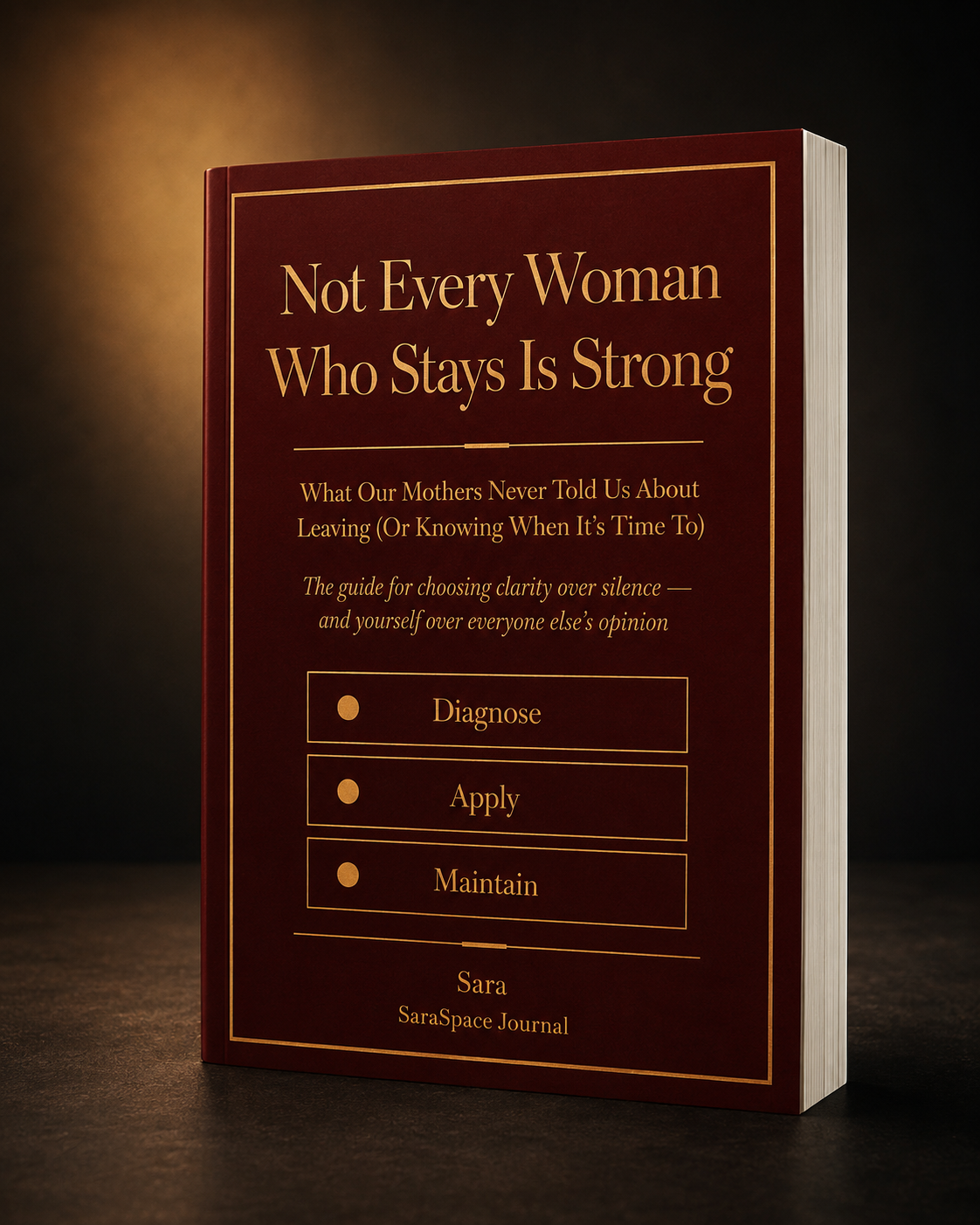
Not Every Woman Who Stays Is Strong:
What Our Mothers Never Told Us About Leaving (Or Knowing When It's Time To)
Here is exactly what is waiting for you inside:
- The Filter Audit — 3 questions that reveal whether you're actually "overreacting," or just used to being under-loved. (Pg. 5)
- The Scorecard Exercise — see, in your own writing, exactly what you've given versus what you've actually received. (Pg. 8)
- The Apology Reflex, Named — why you say sorry first even when you've done nothing wrong, and the exact pattern behind it. (Pg. 11)
- The "Say It Once" Script — the precise wording that finally gets you a real answer instead of another argument. (Pg. 14)
- The 48-Hour Clarity Reset — a short, private process that ends the mental spiral without explaining yourself to anyone. (Pg. 17)
- Why "Just Leave Him" Never Works — the real reason that advice fails, and what actually has to happen first. (Pg. 20)
- The Guilt-Free Decision Framework — how to make your final call, stay or go, without carrying anyone else's opinion into it. (Pg. 23)
- Protecting Your Clarity — how to hold your decision once it's made, even when people around you don't understand it. (Pg. 26)
And the best part? You do not need therapy you can't afford. You do not need to explain yourself to anyone before you're ready. You do not need a mentor, a coach, or anyone's permission to trust what you already know. It's the same simple method I used to finally get honest with myself — and now it's yours.
"I read this in one night. I cried, I reflected, and for the first time in 5 years, I stopped blaming myself. This book gave me the language for what I've been feeling but couldn't explain. I finally understand the difference between staying out of love and staying out of fear."
- Months of writing, rewriting, and refining every exercise until it actually worked
- Editing and proofreading to make sure every page reads clearly
- Professional design and layout for the guide and workbook pages
- Building and hosting the SaraSpace website and checkout system
- Testing the exercises myself, repeatedly, before putting them in front of anyone else
Altogether, this guide cost me over ₦350,000 to put together properly.
A completely fair price for what's inside this guide would be ₦25,000.
₦25,000 ₦9,500Secure payment via bank transfer / card. Instant digital delivery after payment.
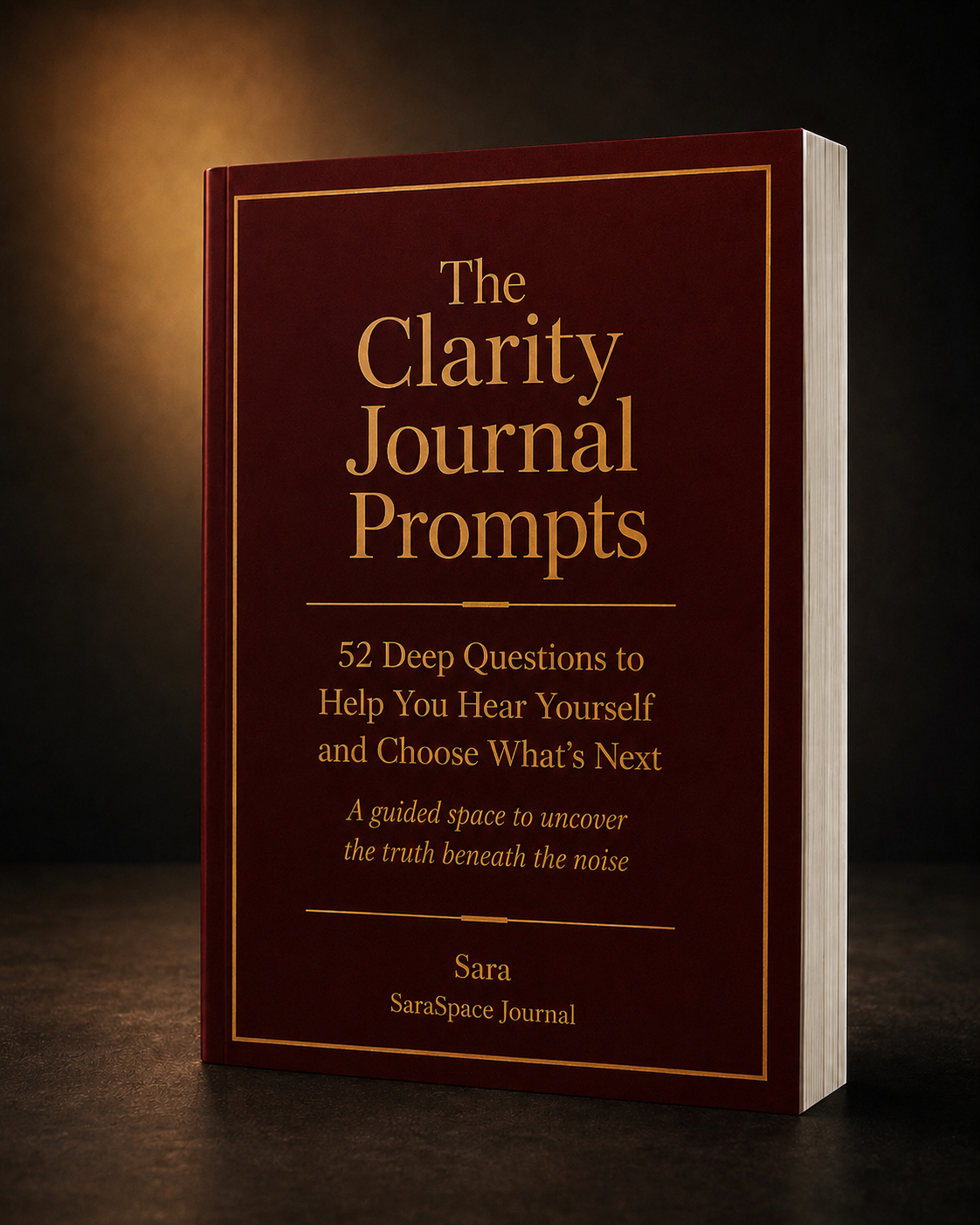
Bonus 1: The Clarity Journal Prompts
14 private daily journal prompts designed to surface what you actually feel — not what you've talked yourself into feeling — so the answer becomes undeniable, on paper, in your own handwriting.
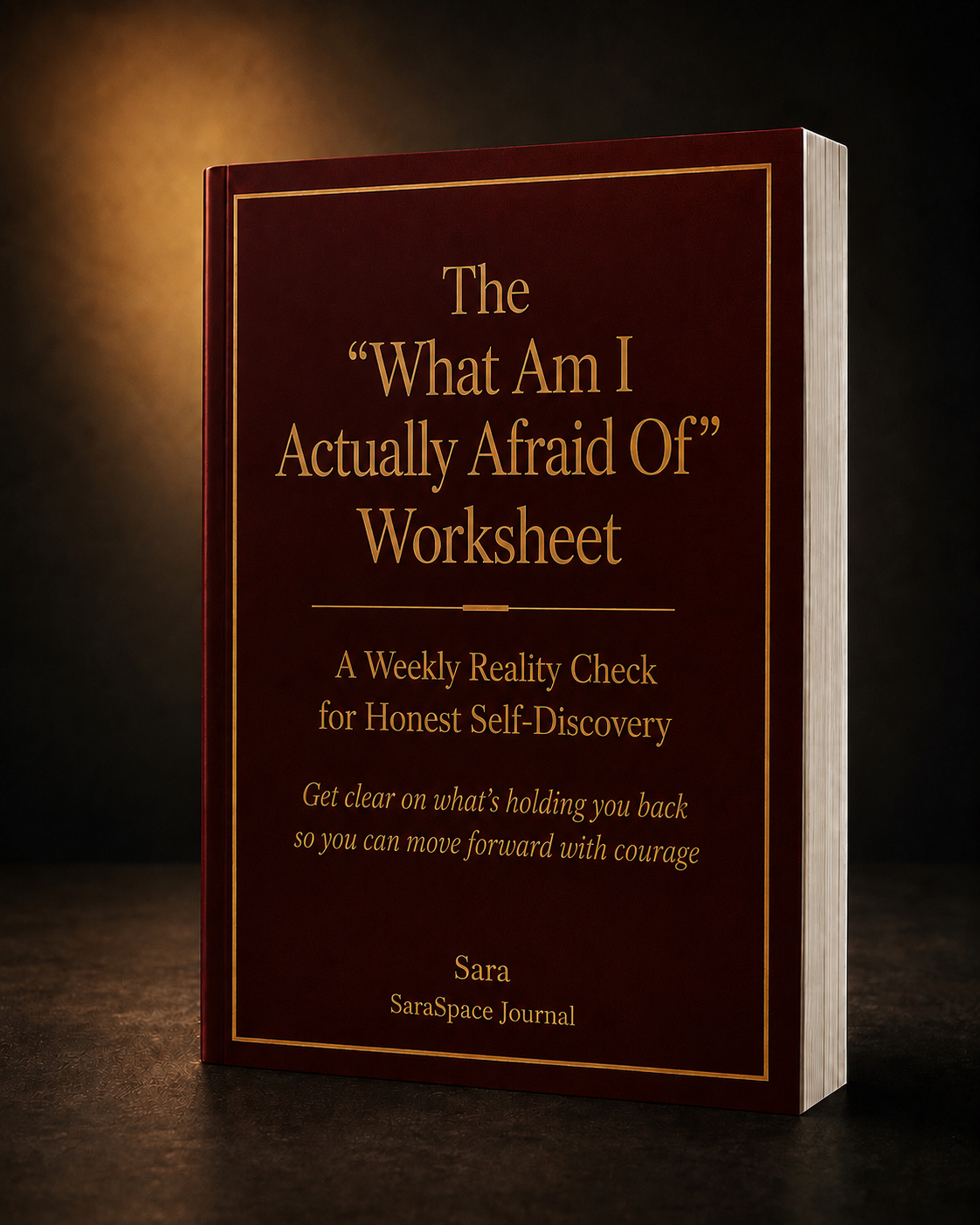
Bonus 2: The "What Am I Actually Afraid Of" Worksheet
A short, pointed exercise that separates real fear from false fear — because most women stay for reasons they've never actually named out loud.
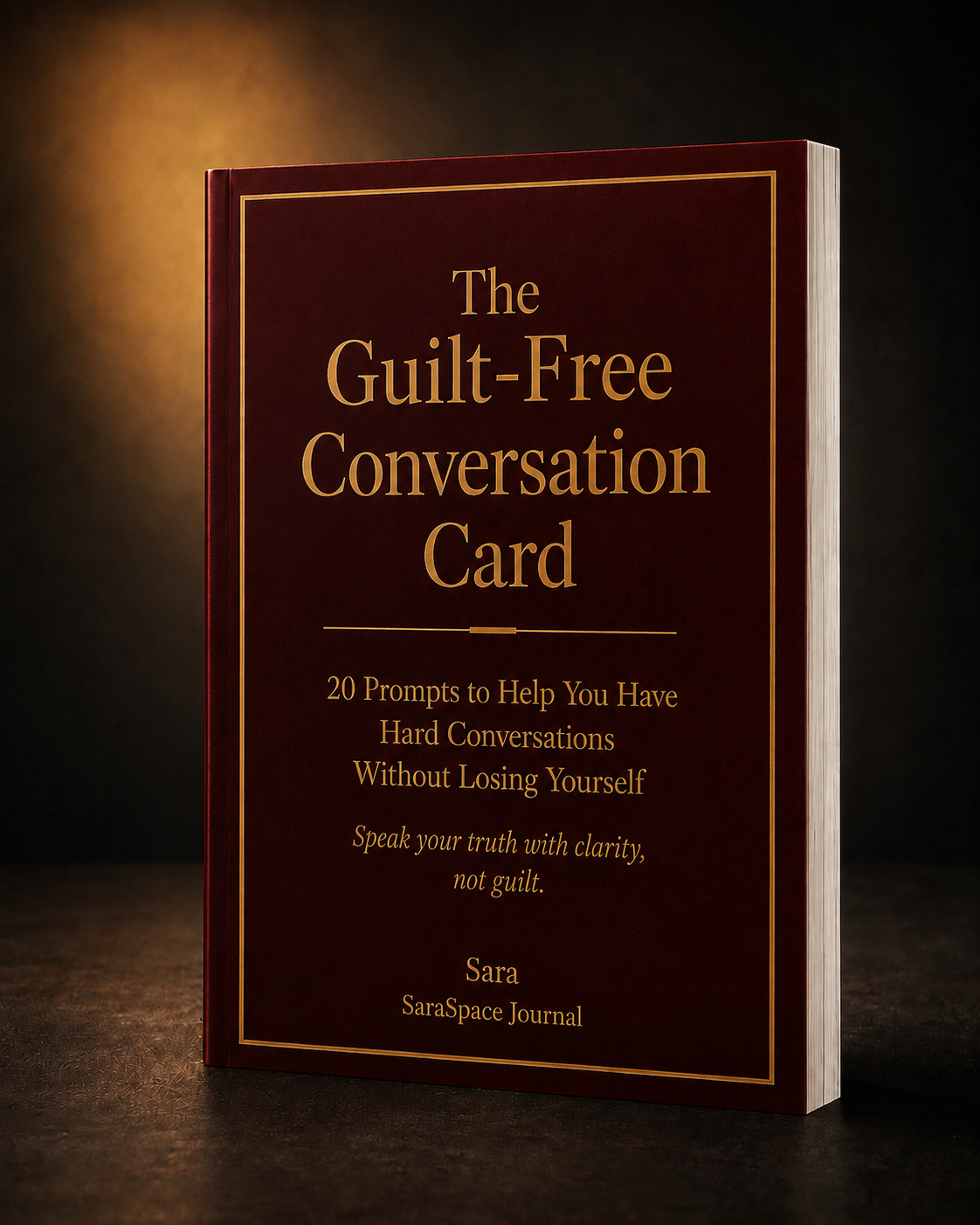
Bonus 3: The Guilt-Free Conversation Card
A printable card with 3 short, ready-to-use lines for when family or friends question your decision — so you don't have to defend yourself in the moment.
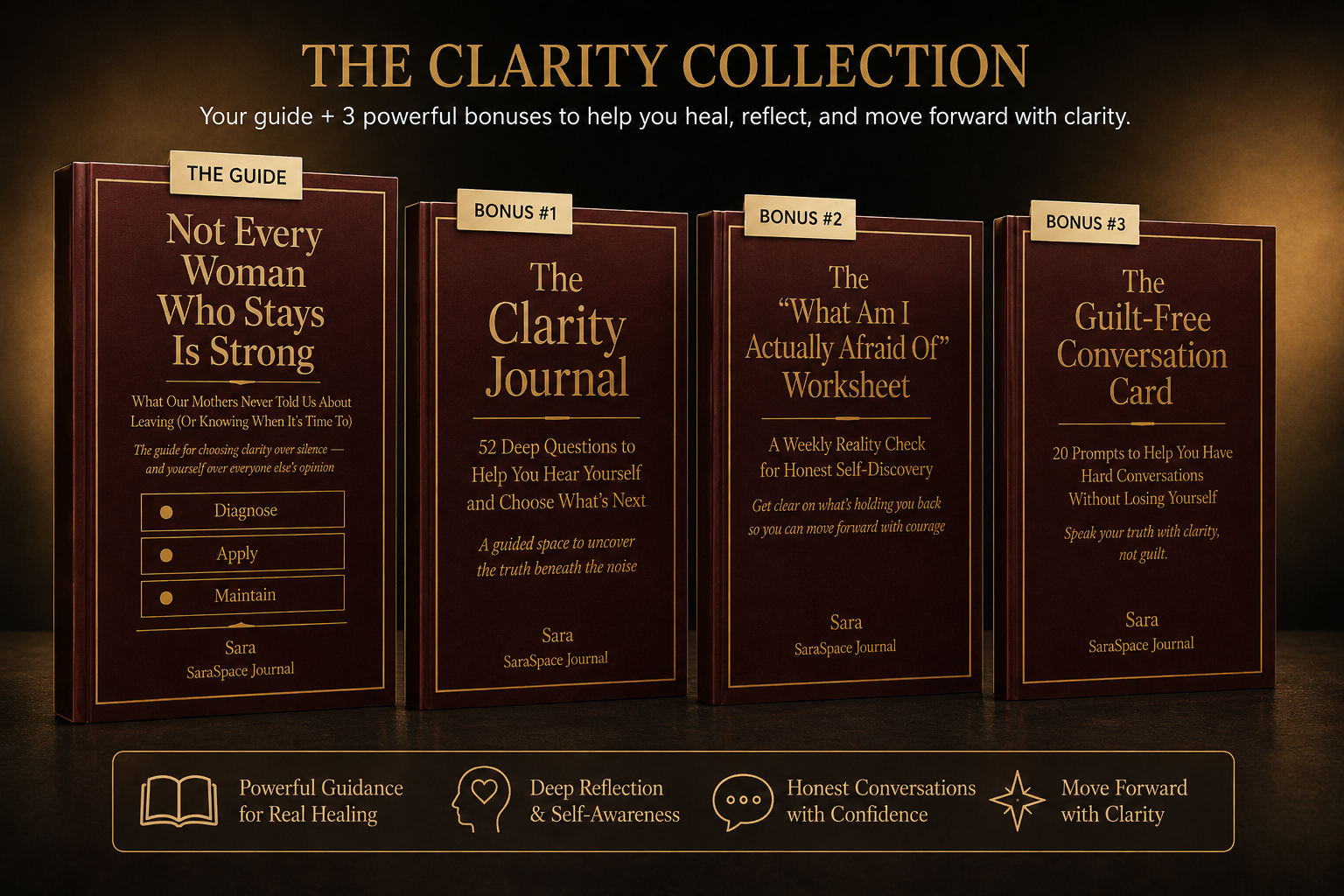
The value of everything together is well over ₦25,000. You're getting all of it for ₦9,500.
Get "Not Every Woman Who Stays Is Strong" + All Bonuses Right Now — ₦9,500Only the first 20 people get this price.
Once those spots are filled, the price returns to ₦25,000. This isn't a countdown gimmick — it's simply the launch pricing for the first readers of this guide.
Still on the fence? I completely understand.
Which is why I'm taking all the risk away from you.
Go through the full guide. Do the Scorecard Exercise, the Filter Audit, the 48-Hour Clarity Reset. If after 7 days you don't feel any closer to a clear answer, email me and I'll refund you in full — no questions asked, no guilt trip, no hard feelings.
This guide only works if it actually gives you something real. So if it doesn't, I don't want your money. The only way you lose is if you do nothing.
"Everyone kept telling me 'you're so strong, you'll survive anything.' But nobody told me that strength isn't about surviving pain — it's about making choices from a place of peace. This ebook changed how I see myself and my marriage. I finally had clarity."
You take action today.
You follow the simple steps inside Not Every Woman Who Stays Is Strong. You don't need months of therapy or years of confusion to get clear. Most women who work through this guide start feeling a shift by the end of Phase 1 — the moment you complete the Scorecard Exercise and see, in your own handwriting, exactly what you've been giving versus what you've gotten back. That's usually the first "oh" moment.
By the end of Phase 2, you'll have a real answer — not a feeling, an actual decision you can stand behind. Give yourself 7 days with this guide. That's often all it takes to go from confused and exhausted to clear and certain.
Or you close this page.
You go back to the same cycle — calling first, apologizing first, closing Google tabs before the answer loads. You keep telling yourself you'll bring it up "properly" tomorrow.
You wonder, for a long time, whether this would have worked if you'd just tried it.
Only you can make that decision. But the women who've already started — they made theirs.
Get "Not Every Woman Who Stays Is Strong" + All Bonuses — Only ₦9,500 (Limited Spots)
Leave Your Comment